
CECIL ROBERTS
A Bonus Post
Nottingham’s former city library, on Friar Lane, had a dowdy space called The Cecil Roberts Room. I went to many author events there, when I began to write seriously in the 80s. I particularly recall seeing Julian Barnes and Bernard MacLaverty. It was in the Cecil Roberts Room that the late, great John Lucas launched an anthology of new writing in 2002. It featured authors who had won an Arts Council bursary. My three thousand pound award was to create time to write the book later published at The Pretender, a novel in which Greene is a character. An extract appeared in the anthology. Around the same time, my book’s eventual publisher, Five Leaves, was putting together The Book of Nottingham. My late partner, Sue Dymoke, was going to write about the history of restaurants in Nottingham, and set about her research. I was given the somewhat more straightforward task, or so I thought, of writing about Nottingham’s literary past.
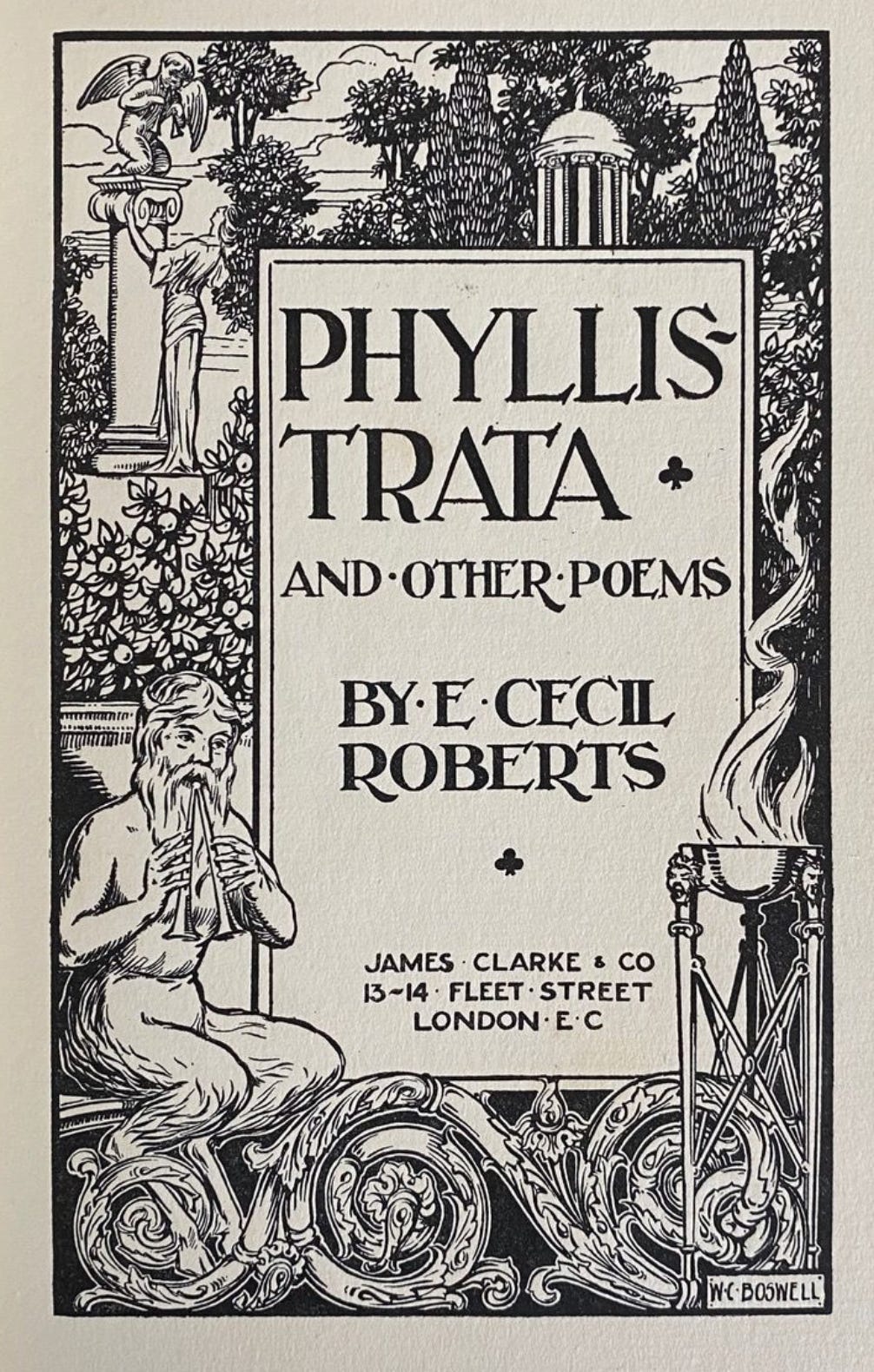
That book came to nothing, although there is a hint of what my essay might have contained in a graphic story I published in 2014, as part of Shelves in James Walker’s Dawn of the Unread anthology (Spokesman Books, available online. The final image is of a bookshelf containing work by all of the city’s most notable authors, living or dead. And Cecil Roberts was, without doubt, a notable author, publishing dozens of books in a long-lasting career that concluded with several volumes of autobiography before his death in 1976. Born in 1892, he began as a poet (publishing as E. Cecil Roberts). Here’s an example of his work.
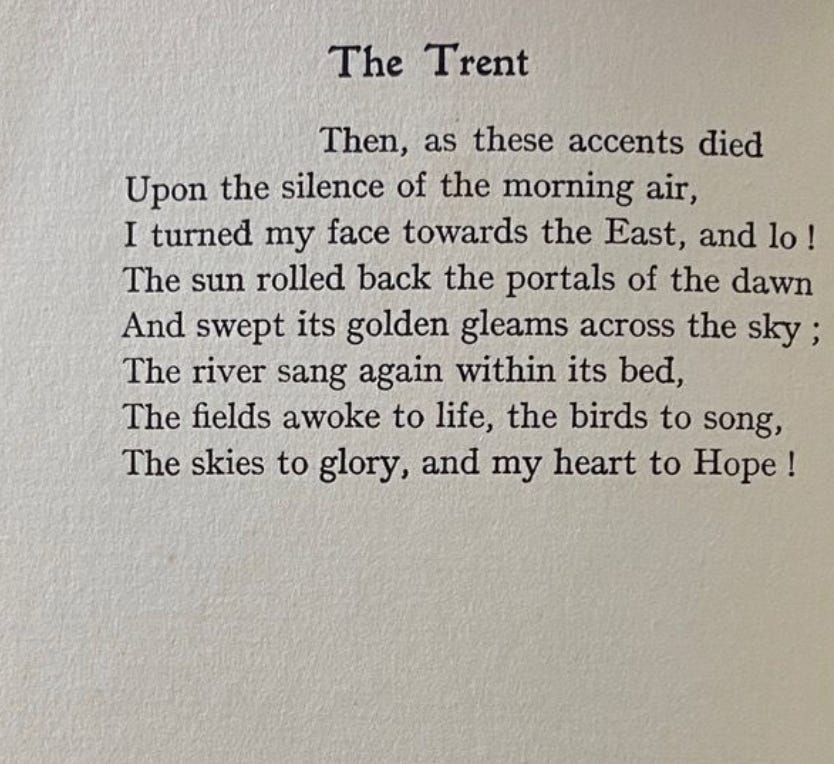
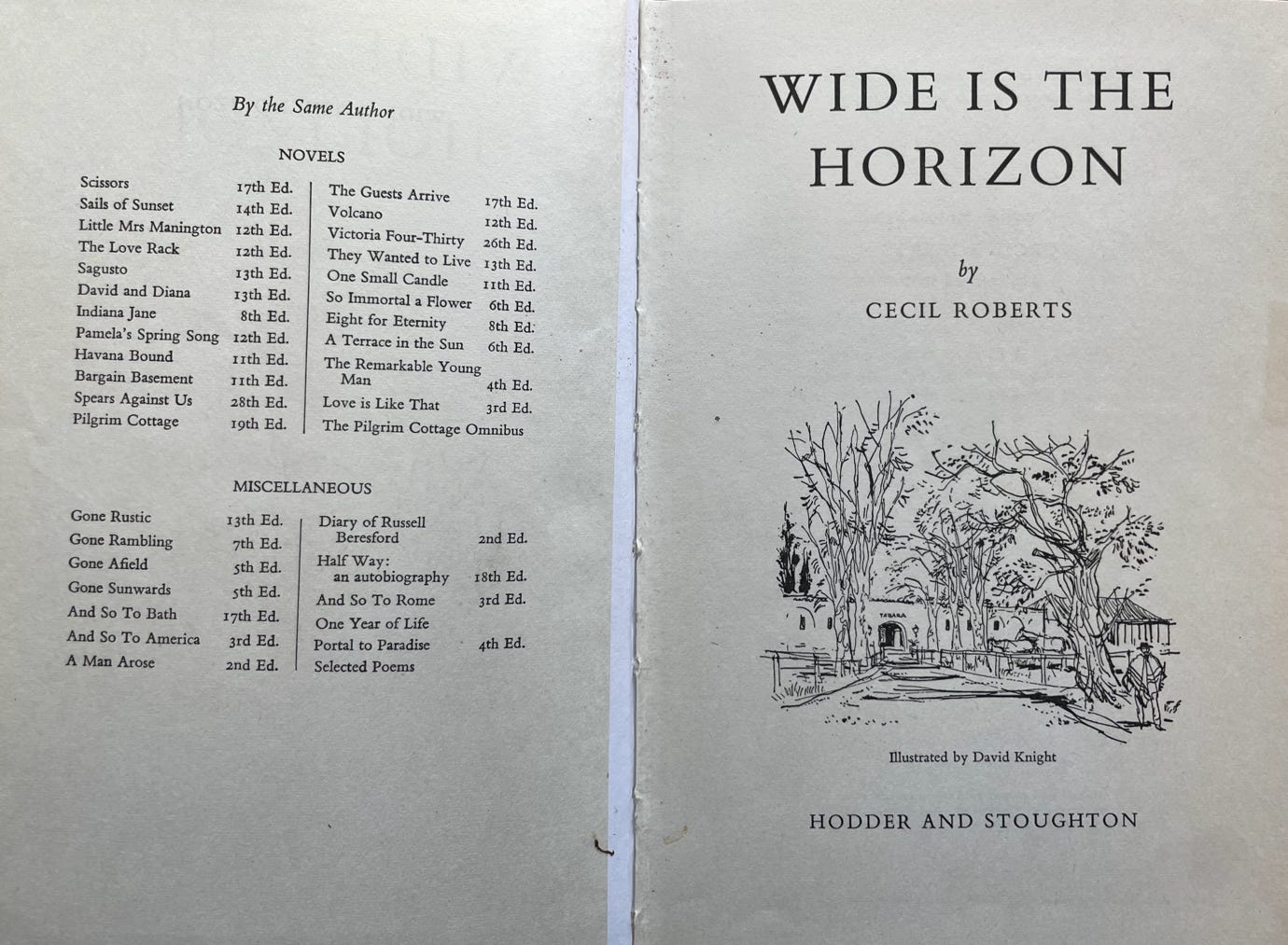
He also wrote a play, several travel books and all that autobiography. A Nottingham man, he got his start at The Journal (unpaid, like Greene), later coming back to edit it. The success of his novels allowed him to give up journalism shortly before Greene arrived in Nottingham. He endowed the Cecil Roberts room in the city library but died efore it opened in 1976. His novels haven’t lasted. The one I tried (at Bromley House Library, which has most of his novels), Indiana Jane, had faint echoes of Evelyn Waugh, but was very bad. Still, his novels must have had something about them in his day, when he appears to have been as successful as, say, Ian McEwan or William Boyd. This point is underlined by the list of reprinted editions proudly included in one of his last novels, Wide is the Horizon.
Graham Greene’s only real autobiography A Sort of Life, was published in 1971 (its sequel, Ways of Escape is essentially an anthology of introductions to the Collected Edition). From the way that Greene wrote about Roberts in ASOL, I’d assumed that their meeting took place either early or in the middle of Greene’s four months in Nottingham. However, when the British Library began to cautiously reopen during the pandemic, and I was able to consult the letters there, I discovered that GG only met Roberts on his very last night in Nottingham. This, therefore, had to be where the scene appeared in my novel (my self-imposed rule is that there’s to be no making stuff up if the truth is known). But, as with some of the other constrictions discussed in these bonus posts, this one proved useful, bringing together two plot threads at the novel’s conclusion. By the way, the details about the film Graham saw that night are accurate, but there’s no evidence Greene saw Beau Brummel in Nottingham.
When he wrote ASOL, Greene didn’t know that Roberts was still alive, or he wouldn’t have included a less than flattering description of the author, described as a Micawber in reverse and a tinpot dictator of the local literary scene – a bit harsh given that he only met him once.
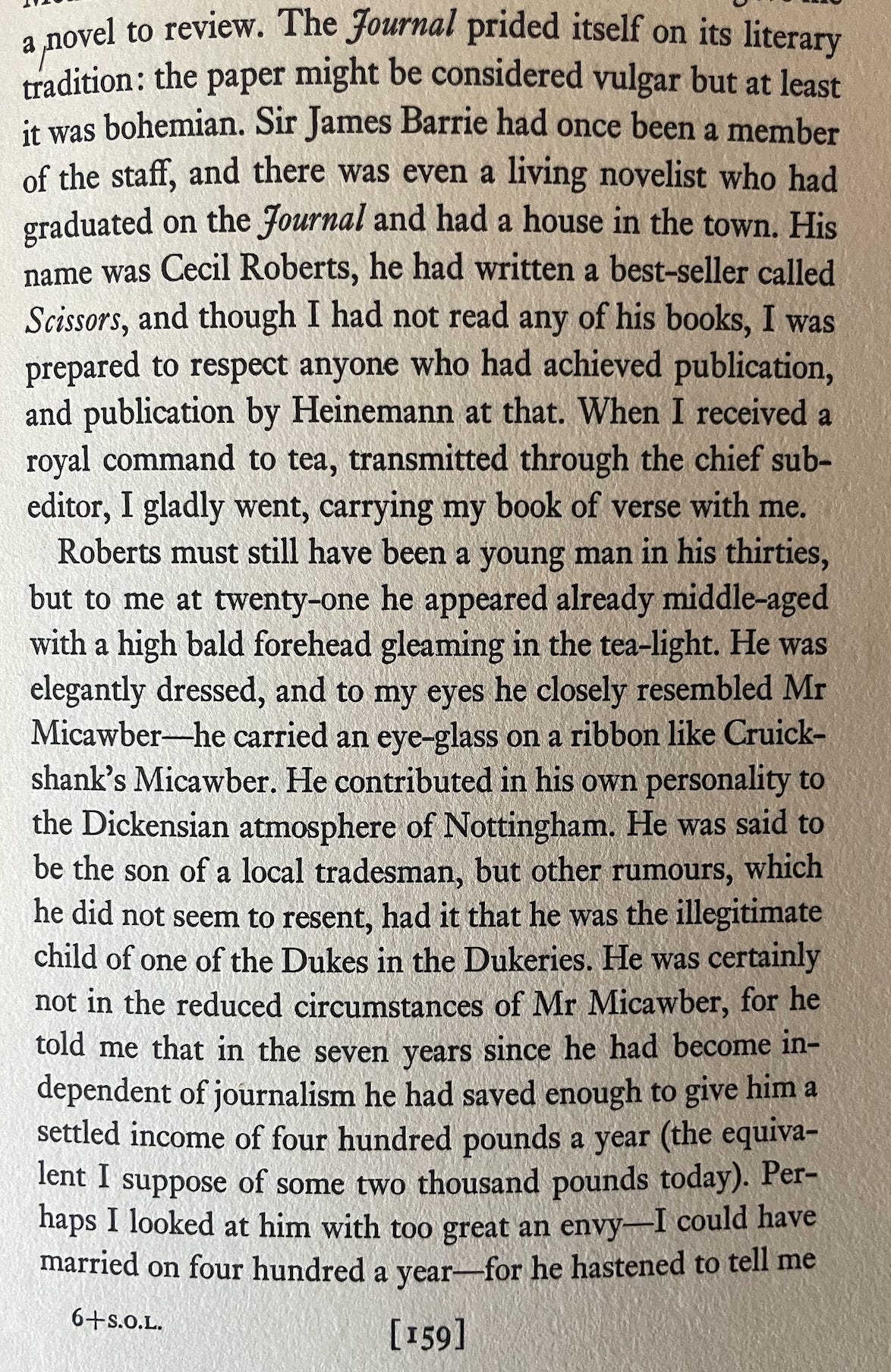
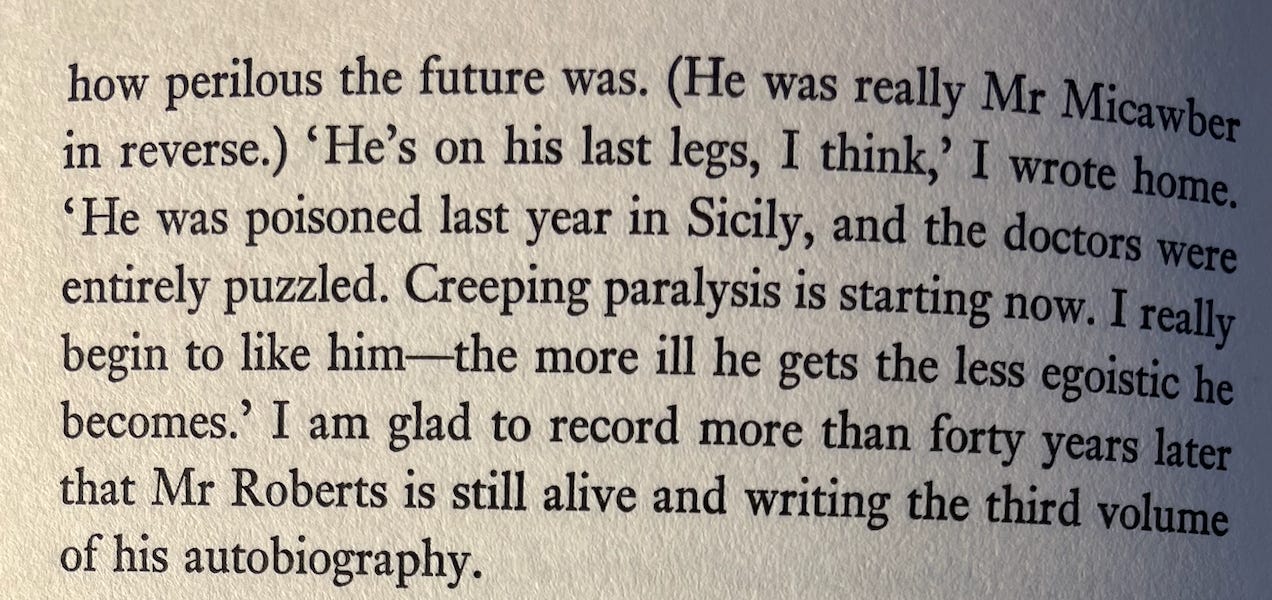
Roberts reviewed Greene’s book for the October 1971 edition of Books and Bookmen, and his complaints led to the section about him being amended, as shown above. While I was at the Ransom Center, I went through the correspondence to do with Roberts and ASOL. What I hadn’t realised, because I read the book in the amended first edition hardback, was that Greene, annoyed by the changes he had been forced to make, cut any mention at all of Roberts in all subsequent editions. I don’t know if Roberts was aware of this.
The story doesn’t quite end there. On a display table at the 2025 launch of the first volume of CJ Barra’s History of Queer Nottingham, I spotted a copy of Roberts’s fifth and final volume of autobiography, which I had only skimmed in Local Studies (I do own the first two volumes, along with his 1932 first attempt at an autobiography Half Way. Greene, who had yet to have a major success at that point, does not appear in. I flipped to the fifth book’s index to see if Greene appeared. He did, but there was no mention of him on the page listed. I tried transposing the last two numbers, and there it was: a reference to an exchange between Cecil and Graham. Roberts is describing a 1971 birthday party in Paris.
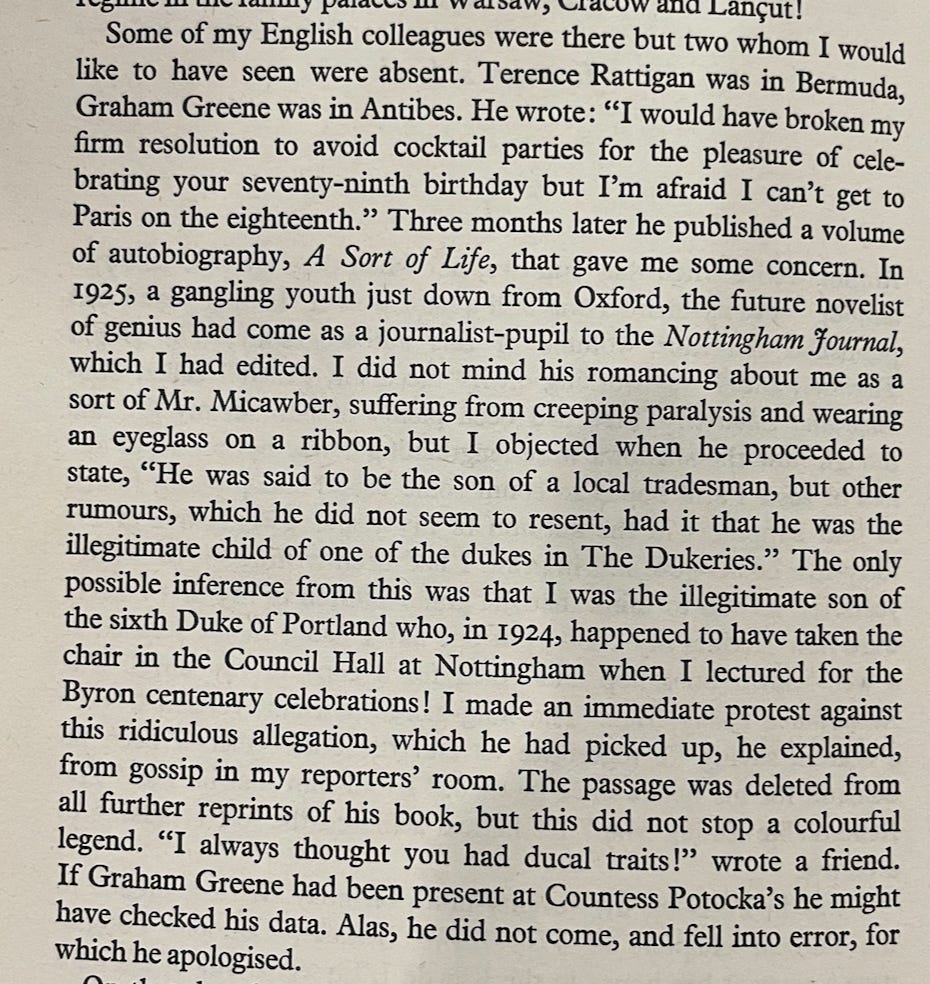
Roberts, it would appear, did not bear a grudge. Indeed, the revised version of the chapter still contains (presumably watered down) the two details he complained about. Roberts here refers to Greene as a ‘colleague’ but there is no evidence he met Greene again after 1926. Indeed, there’s something a little fishy about the way Roberts writes about Greene above, for we know that Greene did not know Roberts was still alive when he wrote ASOL. If the party invitation is true, either Greene found out before the book came out (surely not) or Roberts, having made his complaint, invited Greene both to show he had no hard feelings and to attach himself by association to a writer whose success had by now far eclipsed his.
CJ de Barra, by the way, is doing research into Roberts’ life as a gay man. Roberts may have written six volumes of autobiography, yet, despite a well-known tendency to namedrop, remained discreet about his sexuality in print. In private, Francis King claims in his autobiography (published long after Roberts’ death), that Cecil claimed lovers including Lawrence Oliver, Ivor Novello, Prince George and Somerset Maugham. He also says that Cecil had a long amitié amouruese with an American widow, perhaps suggesting that Cecil, who evidently told King that he had ‘never really gone in for buggery,’ was bisexual. I hope that CJ uncovers more but Roberts does seem to have been unusually discreet. A newspaper article published not long after his death describes how, when the end was near, Roberts spent three days making bonfires of all his private papers. We may never know.
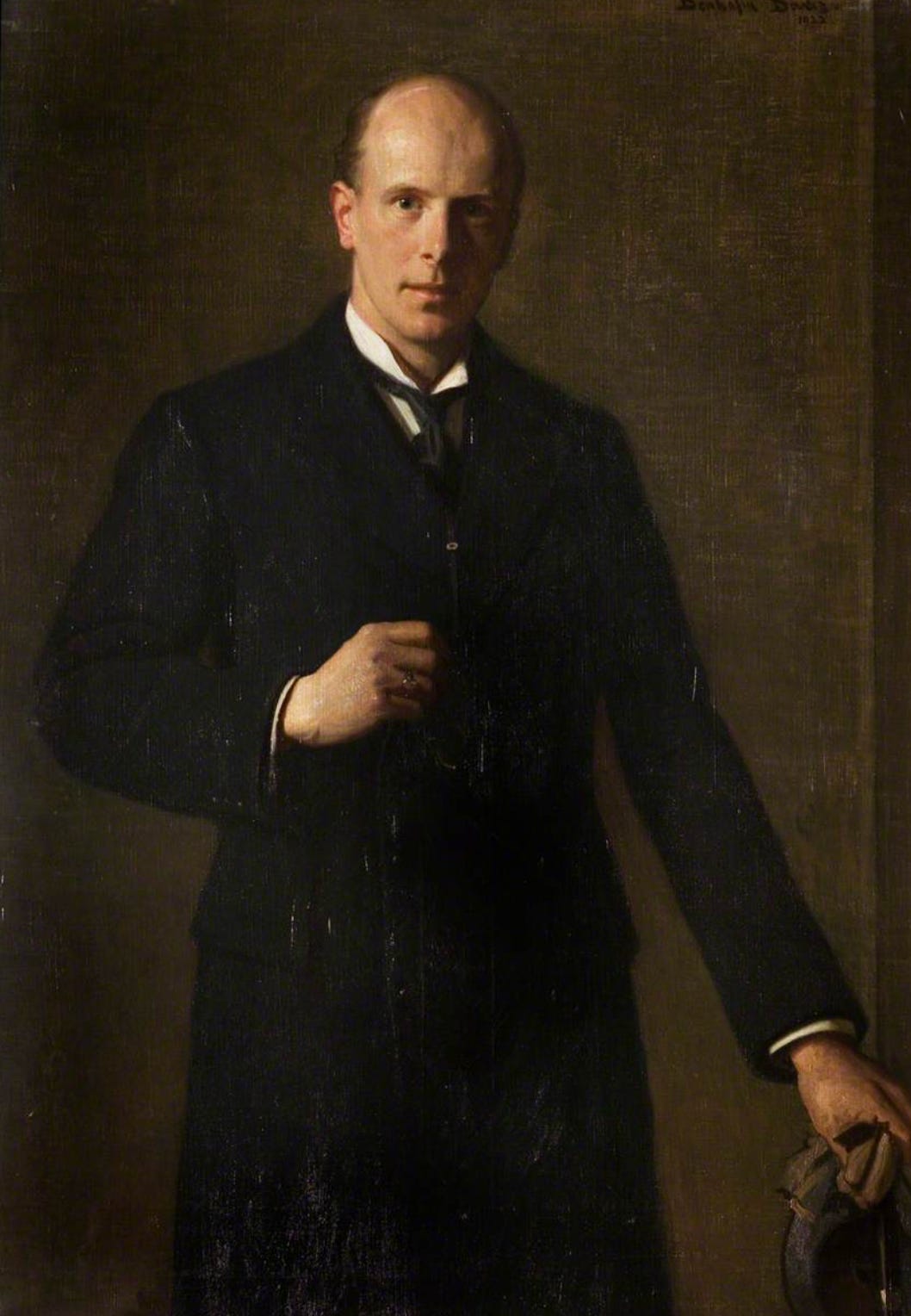
This painting of Roberts is owned by the University of Nottingham. I don’t know whether it is on display there. It’s by Noel Denholm Davis (1876-1950).
The epilogue to Greeneland will appear on Monday.