
TWENTY-TWO
Wednesday, January 13th
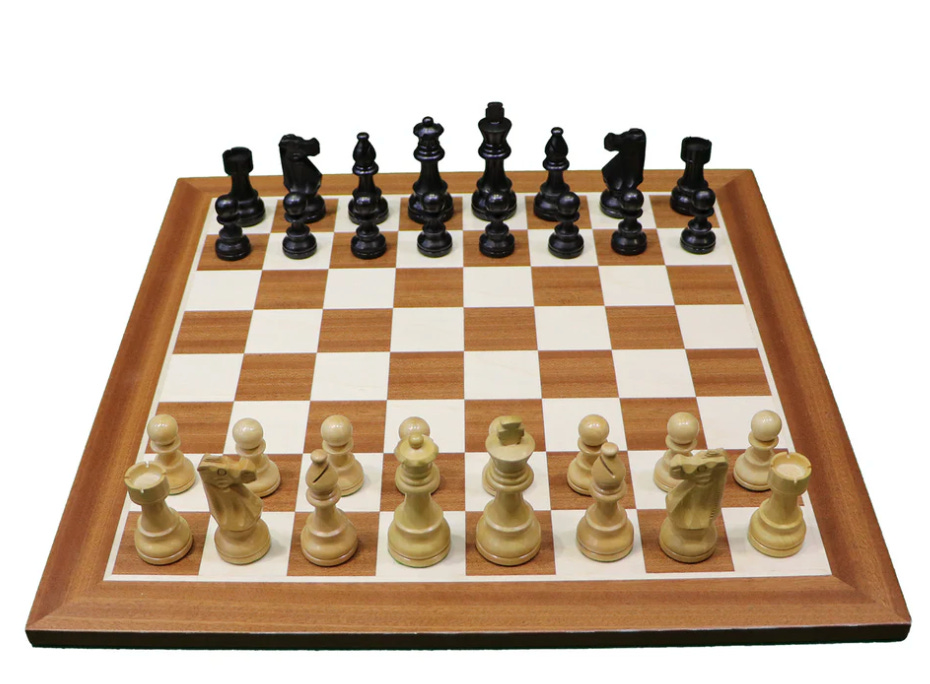
The morning after the chess idea had come to him, he took an early walk with Paddy, using the time to think the story through. He wrote to Vivienne, explaining the concept in some detail. Writing The Episode he’d become bogged down by using too many points of view. He’d found it hard to keep track of who knew what, and when. This suggested that the reader would also have trouble negotiating the complex web he was weaving. Other novels didn’t fall into this trap, although maybe their authors had had the advantage of having read Mr Percy Lubbock’s pioneering work on Point of View, which Graham had only discovered recently.
Perhaps, rather than To Kill the King, Graham should name the novel after its protagonist. The Queen’s Pawn. He liked that. It would do for now.
With The Queen’s Pawn there were two ways he could go with Point of View. He could tell it entirely through the eyes of the people around the protagonist, so that the motives behind her actions remained mysterious. The reader would be forced to guess what she was up to. That was the clever approach. Or he could tell it entirely from the Queen’s pawn’s point of view, the viewpoint never leaving her head. That way, the reader would sympathise with her more and understand why she felt compelled to prostitute herself to powerful men in order to survive.
The new idea was exciting, but he needed Vivienne to share his enthusiasm. He needed her to see that he would work indefatigably, producing whatever work was necessary to secure their future. Writing to Vivienne with some early drafts would help him to crystallize his ideas. The pawn he chose would be a protégé of the Queen, one who, in advancing to the other end of the board, eventually supplanted the Queen. She goes on to protect the King and, perhaps, becomes queen itself. A bloodier ending was also possible.
Back at Ivy House, he found Mrs Loney in his rooms: cleaning, after her fashion. She wore a long apron with deep pockets that looked more suitable to a butcher than a woman of her diminished stature.
‘I don’t suppose you have a chess set I could borrow,’ he asked, without much hope.
She took a deep drag of her cigarette as though thinking, then stubbed it out in his fireplace.
‘Mr Loney had one. I don’t know where it is. Sally might have it. I’ll ask when she gets in from work.’
He thanked her, then waited for the landlady to leave before making a few notes rather than his usual 500 words, after which he ate his cold lunch and made his way over to the cathedral. Father Trollope was late, having had to deal with a death. Priests, Graham considered, had an awful lot to do with death. Their work must give them more material for novels than any other career, save the police or, perhaps, a newspaper’s crime correspondent. Yet you never heard of priests becoming novelists. He supposed they could be accused of breaching the confidentiality of the confessional. Chesterton, of course, had a priest detective, but that was a different notion, not one that appealed to him. Graham needed the sexual instinct to be part of his stories. If he were to write a priest, his hero would be bound to fall in love. Or, at least, keep a mistress.
He began a letter to Vivienne, telling her, more or less accurately, that he was halfway through his instruction. Trollope, he told her, was very thorough, even though this meant that some people took a full year to complete their lessons with him.
‘Do you play chess?’ he asked Trollope, when his instructor at last appeared.
‘I used to, when I was on the stage. It was a good way to pass the time when one had a small part and a long wait. Then I stopped.’
‘Why?’ Graham asked, expecting a convoluted but principled answer relating to religion.
‘One afternoon, when I was playing the vicar in Romeo and Juliet on Shaftesbury Avenue, I was so wrapped up in trying to escape a check-mate, I missed my cue.’
Oxford
‘And you say your mother likes him?’
‘Inasmuch as she likes anyone of the opposite sex.’
‘Life dealt her a harsh hand where men are concerned.’
‘Graham says he’s willing to convert to Catholicism.’
‘One thing to say it,’ Basil ventured quietly, ‘but another to-’
‘He’s having three lessons a week!’ Vivienne interrupted.
‘Have you made his conversion a condition, as it were?’
‘No, no! I would never do anything like that. It’s entirely Graham’s idea. But, of course, I’m pleased.’
She was pleased and she was flattered, but she was still undecided, and there was one other thing that she needed to tell Basil. If she couldn’t do it here, in her cosy, private, cubby-hole of an office, she would never be able to do it anywhere.
‘He keeps renewing his proposal, you see, but I haven’t accepted, except once, in a moment of weakness, and I withdrew too quickly for the acceptance to really count. But Graham has since said...’
And then the words came out in a flurry, prompted by the PS in his last but one letter. She wasn’t sure how clear she was being, but Basil seemed to get the gist.
‘I’ve not heard of this kind of marriage before. It sounds like the opposite of a morganatic marriage, where people of unequal rank marry secretly. You’re talking about a public marriage that is, privately, asexual. You would live together like brother and sister, is that what you’re suggesting? I don’t understand how, if he loves you as you say he does, he would be willing to put up with that.’
‘Possibly he hopes that will change, with time, I don’t know. Graham’s very idealistic.’
‘But also, from what you’ve said, somewhat unbalanced.’
‘Graham says he’s had psychoanalysis and grown out of all that.’
She didn’t mention the revolver tale. There were times when Graham was an overgrown child. But she rather liked that in him. She often felt like an overgrown child herself.
‘I can’t see the monastic solution working.’ Basil advised, in conclusion. ‘Some might call it blasphemous. It’s clear that Graham is willing to make enormous sacrifices in order to be with you. Which is impressive. But only one question can decide matters. Do you truly love him?’
‘I’m nearly sure that I do.’
‘Well then.’
Lost in thought, she didn’t speak again, and Basil got up to go. He paused at the door.
‘Have you told Hugh how things stand between you and Graham?’
She shook her head. ‘I’m not as close to Hugh as I was.’
‘I think he still has hopes in your direction,’ Basil said, awkwardly. ‘Hasn’t he made that clear?’
‘He once talked about our getting married, but in such an abstract way.’
‘That is Hugh’s manner,’ Basil said, with a wry smile. ‘He’s good at waiting.’
Waiting for what? For Basil to retire, so that he could take over? No, that wasn’t what Basil was getting at. Hugh was waiting for Vivienne to grow up, to know her own mind.
‘You can tell him if you want,’ she told her boss. ‘I don’t know how to.’
‘As long as you’re sure. Graham’s a very promising young man, but Hugh is already an accomplished one, and a reliable one. You’d do well to keep him as your friend. I can put it to him discreetly, if you think his opinion will help you make up your mind.’
‘I trust your judgement,’ Vivienne said.
Thanks for reading Greeneland. The next chapter will appear on Thursday.
If you’re enjoying the novel, please tell your friends about it in whatever way suits you best. Word of mouth is by far the best recommendation.